Best Grade of Aluminum Sheet For Bending
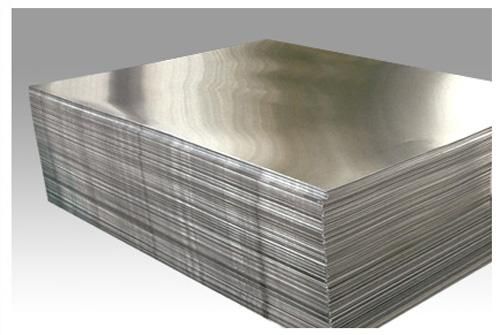
Best grade of aluminum sheets for bending are not a single grade, but rather a group of materials characterized by "high plasticity, low yield strength, and homogeneity."
In sheet metal bending, roll bending, and stretch bending scenarios, aluminum sheet selection is most prone to falling into the trap of prioritizing strength, ultimately leading to problems such as cracking on the outer side of the bend, excessive springback, and orange peel texture on the surface. Based on over twenty years of engineering service experience with exported aluminum materials, best grade of aluminum sheets for bending are not a single grade, but rather a group of materials characterized by "high plasticity, low yield strength, and homogeneity." Their adaptability needs to be comprehensively judged by considering three dimensions: elongation, minimum bending radius, and grain size.

From a performance gradient perspective, aluminum sheets suitable for bending scenarios can be divided into three core series.
For extreme bending applications, 1xxx series O-state pure aluminum sheet, represented by 1060-O and 1100-O, is the preferred choice. Its elongation in the annealed state is stable at 28%-35%, and the minimum bending radius perpendicular to the rolling direction can reach 0.5 times the plate thickness. It can achieve 180° folds without cracking, making it the optimal solution for complex small-radius forming such as decorative edging, heat sink fins, and lampshade roll bending. Its drawback is its relatively low strength after forming, making it suitable only for non-load-bearing decorative applications.
For general bending applications, the main choice is 3xxx series aluminum-manganese alloy, with 3003-O and 3004-O being the standard grades in the global sheet metal industry. 3003-O has an elongation of 22%-28%, a minimum bending radius of 1.0-1.5 times the plate thickness, and strength approximately 20% higher than pure aluminum. It also boasts excellent atmospheric corrosion resistance and is widely used in building exterior sheet metal, tank rolling, and chassis shell bending. Among them, the 3003-H24 semi-hard state is an easily underestimated choice: its elongation can still maintain 8%-12%, the springback after bending is reduced by more than 40% compared to the O state, and the rigidity of the finished product is significantly improved. It is suitable for structural parts that do not require subsequent heat treatment after bending and require a certain level of support strength, offering excellent cost performance.
If both bending performance and finished product strength are required, 5xxx series low-magnesium alloys are a better choice. The 5005-O and 5052-O have an elongation of 18%-25%, a minimum bending radius of 1.5-2.0 times the plate thickness, and a tensile strength of 190-250MPa. They also have excellent resistance to marine atmospheric corrosion and are suitable for roll bending and large-angle bending in applications such as marine interiors, outdoor supports, and transportation facilities. However, it should be noted that the higher the magnesium content, the more significant the decrease in plasticity. 5083-O is only suitable for large-radius slow roll bending and cannot be used for small-angle sharp-edge bending.
In actual production, two implicit factors directly determine the success or failure of bending. First, the rolling direction: Bending perpendicular to the rolling direction reduces the risk of cracking by more than 60% compared to bending parallel to it, with the difference being particularly significant when the plate thickness exceeds 3mm. Second, grain size control: When the grain size is stable at ASTM level 5-7, the surface finish after bending is optimal, and orange peel defects are less likely to occur. Grains that are too coarse or too fine will degrade the forming effect.
From my personal experience, the most common selection mistake is blindly choosing 6061-T6 aluminum sheet for bending in pursuit of finished product strength, ultimately resulting in batches of microcracks requiring rework. In reality, only the T4 temper of 6000 series aluminum alloys is suitable for moderate bending. The T6 temper has high hardness and poor plasticity; forced bending will inevitably damage the internal structure of the material. If strength needs to be considered after bending, 5052-H32 or 3004-H24 aluminum sheet are far more reliable options than 6000 series T6.
HC Aluminum offers customized aluminum sheets for bending applications, precisely matching alloy conditions to customer bending angles, radii, and strength requirements. It provides pre-leveling and stress-relieving treatments, ensuring sheet flatness ≤1mm/m, effectively reducing on-site forming scrap rates.

- Rust-proof aluminum Sheet PlateAug 04, 2025
Rust-proof aluminum sheet is a type of aluminum alloy sheet with significantly enhanced corrosion resistance t...
- 5083 H321 Aluminum PlateSep 21, 2022
5083 h321 aluminum plate can be regarded as the representative product of 5000 series marine grade aluminum pl...
- 1050 Aluminium Sheet ManufacturerDec 29, 2021
HC Aluminum is large scale 1050 aluminium sheet manufacturer based in China who offer prime quality aluminum s...
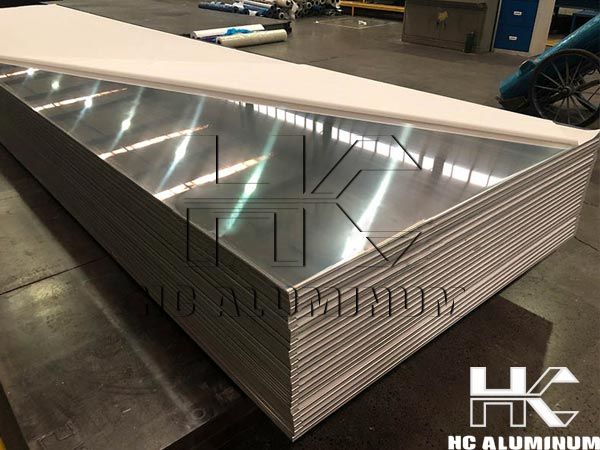
- 6mm Aluminum PlateJul 05, 2023
6mm aluminum plate is a common used aluminum plate thickness and can be cut to size according to requirement.
- Different Types of Aluminum Sheets on Alloy SeriesAug 04, 2026
From a professional perspective of industrial exports, aluminum sheets circulating in the global market can be...
TABLE OF Contents

HENAN HC ALUMINUM CO., LTD
Tel: +86-371-58525958
Email: sales@aluhc.com
Website: https://www.aluhc.com
OFFICE ADDRESS: 1107, Lujin Building, CBD, ZHENGHZOU, HENAN CHINA
CONTACT: MR. MA
CELL/Whatsapp: 008618137889531